
Who is the “Maryland Trumpet Guy?”
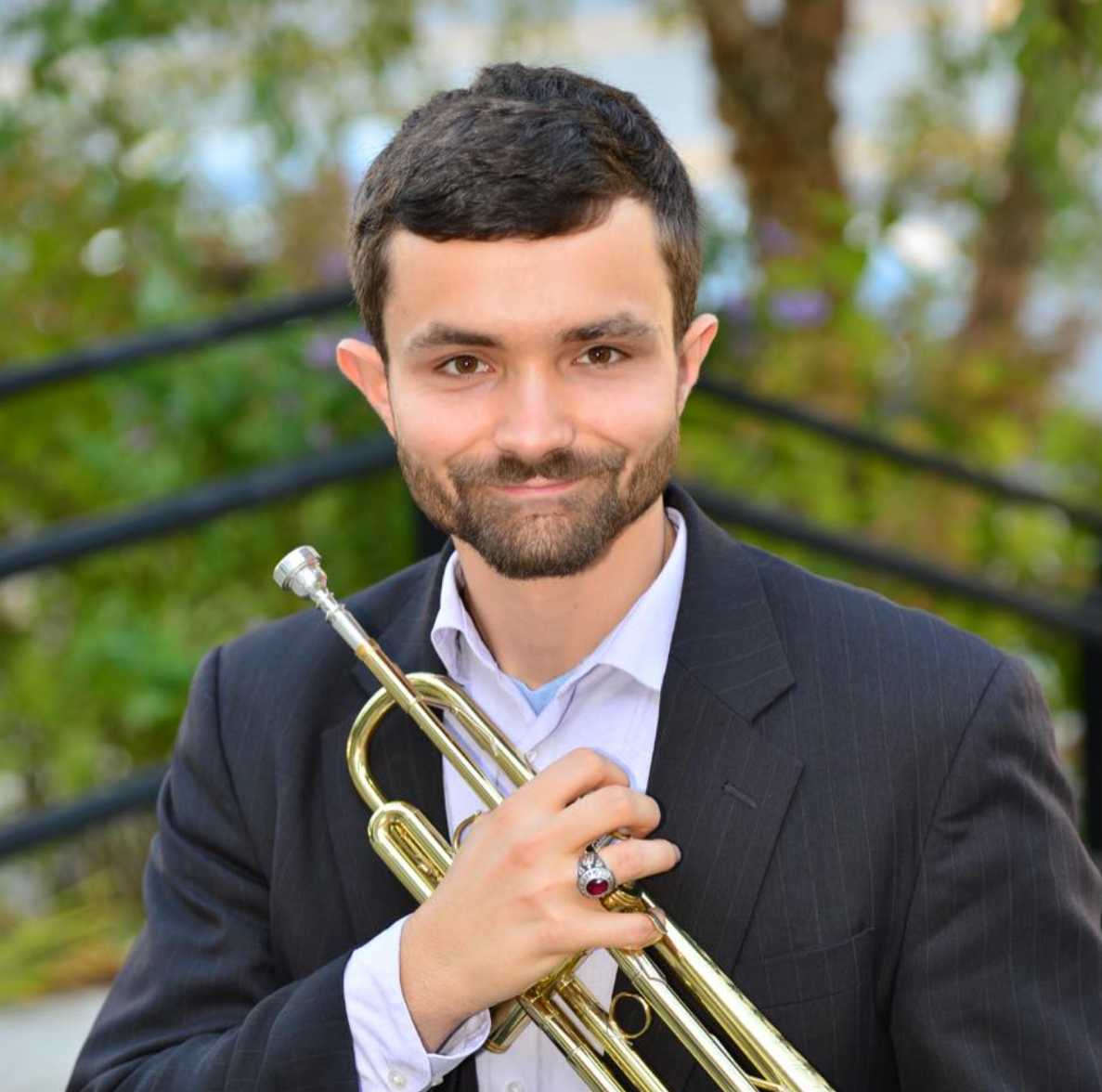
Hi, I’m Andrew Giska
I’m the Maryland Trumpet Guy
Teaching trumpet privately since 2018, I ‘ve worked with musicians in schools, marching bands, ensembles, and private lessons.
I’ve worked with students ranging from beginners picking up the trumpet for the first time to experienced musicians preparing for auditions, performances, and the next level of their playing.
But teaching trumpet isn’t just about teaching someone how to play the instrument.
It’s about teaching someone how to become better at something.
This idea is at the center of everything I do.
My Background
I earned my Bachelor of Music Education from Towson University and have spent years working with musicians both inside and outside the classroom.
I've taught students from elementary school through adulthood and served as the Head Brass Instructor for the Calvert Hall Competition Marching Band for nearly a decade.
During that time, I've worked with students in a program that has earned 5 National Championships and 16 State Championships.
I'm a member of the National Association for Music Education (NAfME) and the Maryland Music Educators Association (MMEA).
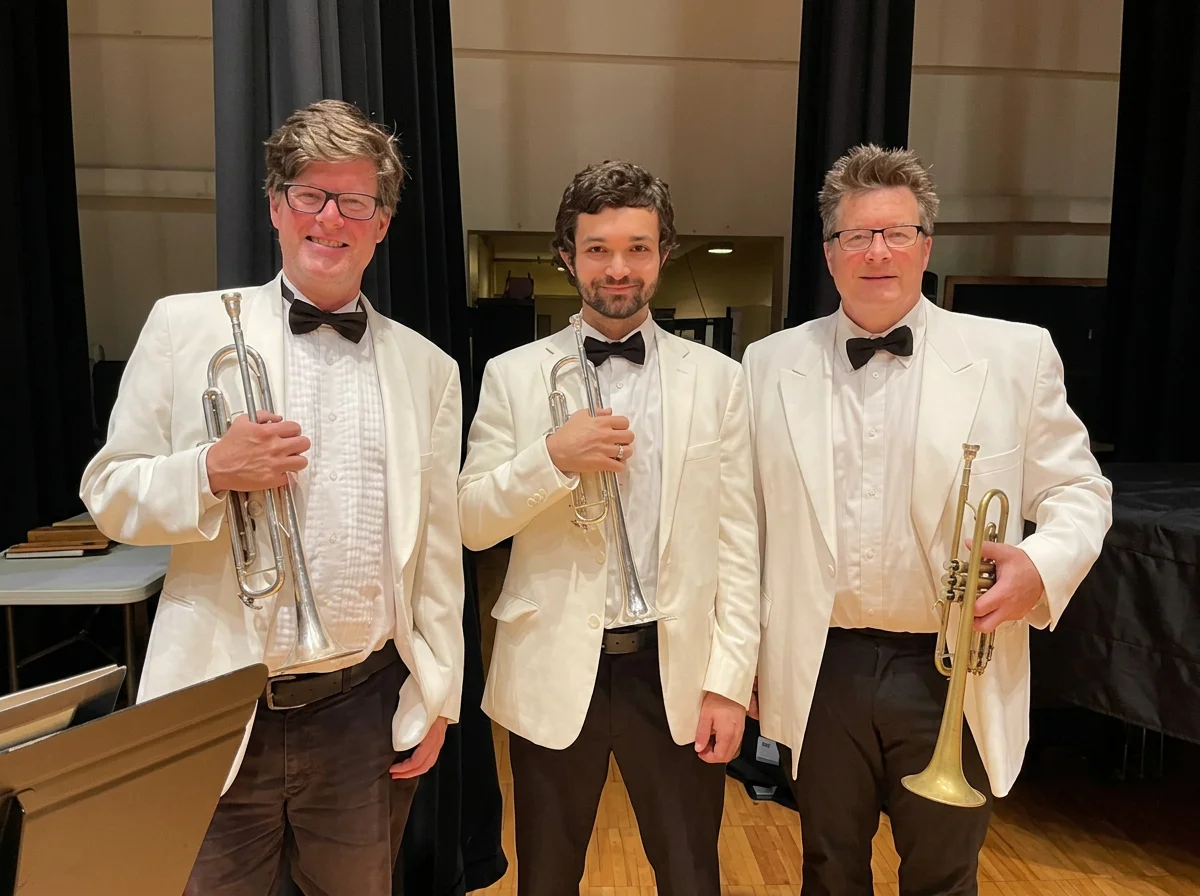
I'm also an active performer with ensembles including the Endless Mountain Music Festival Orchestra and Quintet, Reisterstown Jazz Band, and Bachelor Boys Band, along with other ensembles throughout the Mid-Atlantic.
Performance Example
Here is a performance from one of the brass ensembles I’ve performed with.
There is something more important…
A resume can tell you what someone has done.
It doesn't tell you how they teach.
That's what matters here: Independence.
The Goal is Independence
Eventually, students should be able to recognize, diagnose, and solve problems without me.
A teacher can tell a student: “practice this”, but that’s only useful with the teacher present. Students should understand the “why” behind what they’re playing.
What problem are they trying to solve?
How will they know whether it’s working?
Should they change their approach?
What should they do if they get stuck?
The goal is for the student to become increasingly capable without the teacher. You’ll become a better trumpet player with any good teacher. But I want you to leave with something more:
The ability to teach yourself.
How I Teach
-
A student isn't just a trumpet player walking into a lesson.
They're a person.
Before I can effectively teach someone, I need to understand who they are, what they care about, what they're trying to accomplish, and what they believe about their own abilities.
That doesn't mean lowering expectations.
It means creating an environment where a student can actually respond to high expectations.
Students should feel respected, challenged, and supported.
Not judged.
-
When something isn't working, I want to know why. Performance is the result of a system.
Examine the faults of the system and we can build skills with confidence. What is the student doing and thinking while they play?
This is the root of all playing.
Once we figure this out, we can make a change and see what happens. The goal isn't to assign blame. The goal is to find the solution.
-
I strongly believe this.
A student who struggles with something isn't necessarily incapable of doing it.
They may simply need:
A different explanation
A different exercise
A different approach
More time
Better practice
A smaller step
Someone to help them see the problem differently.
Difficulty is information.
It tells us that something needs attention.
It isn't proof of incapability.
-
When a student performs well, or struggles, there's usually a reason.
Rather than chasing isolated symptoms, I look at the process that created the result.
This applies to everything:
Tone.
Range.
Endurance.
Articulation.
Sight-reading.
Auditions.
Practice.
Performance.If something isn't improving, I don't demand the student try harder.
We figure out what needs to change.
-
It's tempting to measure progress by numbers: higher notes, faster tempos, longer endurance, and harder music.
But…
Is it really worth it if a student’s sound, consistency, or technique suffers?
We focus on building the underlying skill first.
Then the speed comes.
-
Sometimes the right answer is to temporarily make something easier.
This is part of development, not failure.
Sometimes stepping backward gives you the position you need to move forward.
-
If we've been doing the same thing for weeks and getting the same result, we’ve reached a plateau.
A plateau tells us something needs to change: an exercise, the way we practice, or the approach to a problem.
A plateau isn't necessarily a wall. Sometimes it's a sign pointing toward a different path.
-
When something becomes difficult, we normally say: “I can’t do this” but forget to add the word “yet”.
A difficult skill may require more time, better instruction, a different approach, or more deliberate practice.
My job is to help students understand that hard does not mean impossible.
-
Practice isn't simply spending time with a trumpet.
What was the student trying to accomplish?
Intentional practice means listening, thinking, making adjustments, and learning from mistakes.
Mistakes are useful when we understand why they happened and what we're going to change.
Good practice isn't about avoiding mistakes.
It's about making mistakes useful.
-
Don’t let the last 1% erase the first 99%
A student may finally play 99% of a difficult piece correctly but become frustrated with one thing.
That one thing matters, but it doesn’t erase everything the student did well.
We identify what still needs work without forgetting how far the student has already come.
Progress deserves to be recognized.
-
I don't expect students to be perfect. I do expect them to make progress. Mistakes, bad practice days, and plateaus are expected.
There will be times when something that used to feel easy suddenly feels difficult. That's part of learning. My standard is to keep showing improvement.
Compassion doesn't mean abandoning standards. And having high standards doesn't require treating students harshly. Students can be supported and held accountable at the same time.
Ready to Start Your Musical Journey?
Fill out our quick form, tell us a bit about your goals, and we’ll reach out to craft the perfect lesson plan—no worries, we’ve got you covered.
OR
If you’re ready to begin as soon as tomorrow, click the “Book Lessons” button right below and we can get started attaining your trumpet goals.